Amanah Begins at Home: How Trust Can Heal What Is Breaking Our Families
Islamic teaching on amanah is not just for commerce or governance. It is the quiet foundation that struggling families in our communities desperately need.
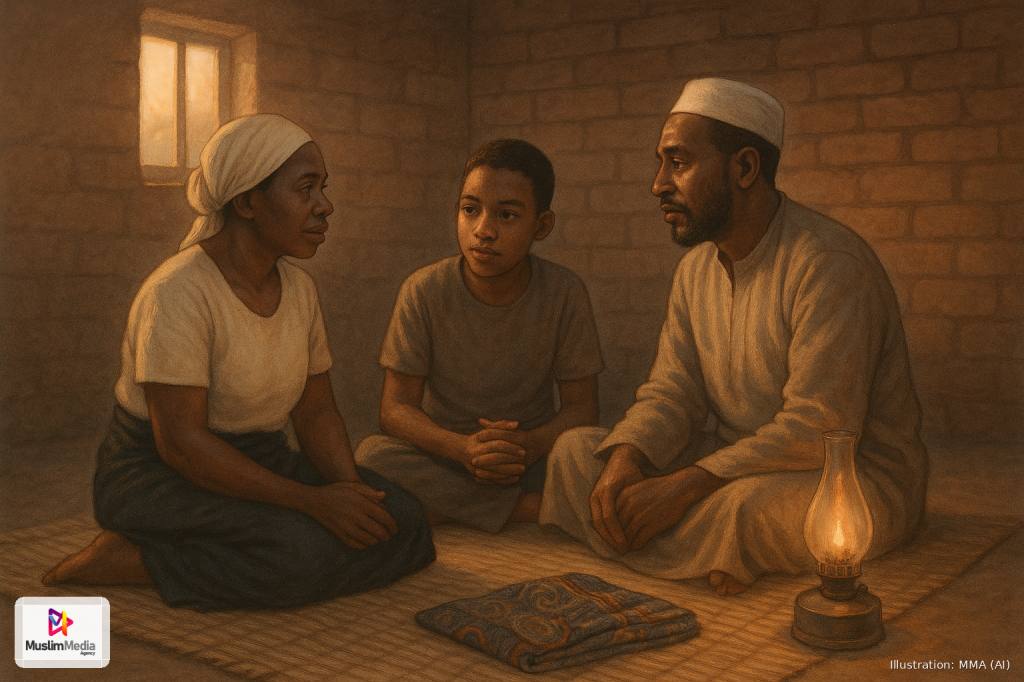
We speak about amanah often in the mosque. We hear it in khutbahs about honest business dealings, about keeping community funds, about leaders who betray the people they serve. All of that is correct and necessary. But there is a conversation we are slower to have, and it is the one that matters most to the person sitting beside you in the pew, or eating quietly at your table at night. Amanah inside the family. That is where the real test lives.
Many Muslim families in Malawi are under strain. That is not a secret, and it is not a shame to say it plainly. Marriages buckle under financial pressure. Parents and grown children stop speaking. Siblings divide over inheritance and property. Husbands and wives lose confidence in each other slowly, not in one dramatic moment, but through a hundred small betrayals: a lie softened into a half-truth, a promise made and quietly forgotten, a secret kept not out of wisdom but out of fear of accountability. Trust leaks away like water through a cracked pot, and one day the family wakes up dry.
What does amanah actually mean in this setting? At its simplest, it means you are a trustee. Everything placed in your care, your spouse, your children, your parents in their old age, the money that passes through your hands, the words shared with you in confidence, belongs to Allah first. You are the keeper, not the owner. That shift in thinking is not small. It changes the weight of every decision you make inside your home.
A husband who understands himself as a trustee does not hide his earnings from his wife and call it protecting the household. He understands that financial transparency is part of his amanah toward her. A wife who holds the same understanding does not run the home's daily affairs in a way that excludes her husband from knowing what is happening. She is not the owner of that household either. They are co-trustees, answerable to Allah for what they do with what He gave them together.
The same principle runs through parenting. Our children are an amanah. We did not manufacture them. We did not earn them through merit. They were given to us, and we will answer for how we raised them. A parent who lies to their child, who makes a promise and breaks it casually, who says one thing in public and does another at home, is eroding that child's capacity to trust. And a child who cannot trust the first people they ever knew will carry that wound into every relationship that follows. We are planting seeds every day in our homes. Amanah asks us to be honest about what we are planting.
Rebuilding trust in a family that has lost it is slow, unglamorous work. There is no single conversation that fixes it. But amanah gives us a practical starting point. Start with your word. If you say you will do something, do it. If you cannot, say so before you fail, not after. Start with money. If finances are a source of conflict in your home, bring them into the open. Hiding them has not fixed anything. Start with what you share and what you withhold. Ask yourself honestly whether the secrets you are keeping serve your family or protect only yourself.
The Prophet, peace be upon him, told us that the one who is not trusted in small things cannot be trusted in large ones. Our families are not small things. But the daily habits of honesty that repair them are. A kept promise at breakfast. A straight answer when your child asks you something hard. An honest account of where the money went. These are not heroic acts. They are the ordinary fabric of a household where amanah is lived rather than only preached.
There is also something important here about how we handle betrayal when it has already happened. Amanah does not demand that we be blind to how we have been hurt, or that we pretend violations of trust did not occur. What it demands is that we respond as trustees rather than as people seeking revenge. Repairing trust requires the person who broke it to be honest about that, to ask for forgiveness sincerely, and to change their behaviour over time. It also requires the one who was hurt to give that repair a fair chance. Neither side can do the other's work. But both sides are accountable to Allah for the effort they make or refuse to make.
Our families are not going to be saved by lectures or by guilt. They will be saved, insha'Allah, by people who decide, one day, to begin living the thing they already believe. Amanah is already ours. It came with the deen. We simply have to carry it home.
Comments
Be the first to comment.