Hilm: The Patience That Does Not Look Like Patience
Hilm is not weakness or silence. It is the quiet, controlled strength that holds a person together when everything around them is pulling apart.
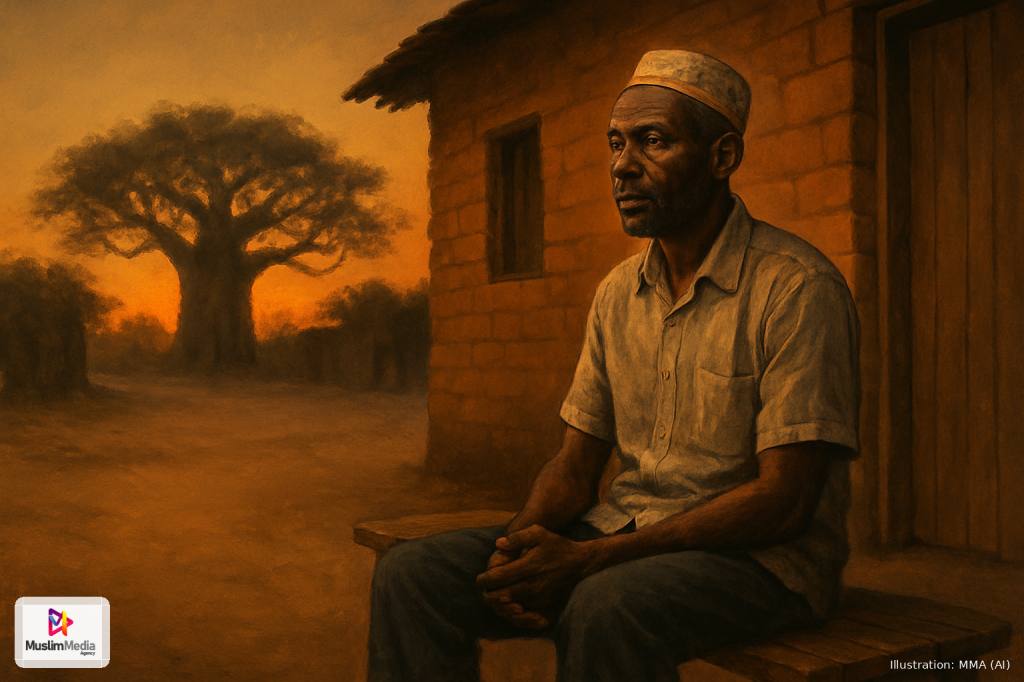
There is a kind of patience that everyone can see. A man loses his job and he weeps privately, makes du'a, and waits for Allah's provision. People notice his calm and they say, mashallah, what a patient man. That is sabr, and sabr is beautiful. But there is another kind of patience that nobody notices, and it does not even feel like patience from the inside. It feels like a choice you make in a single second, over and over again, for the rest of your life. That is hilm.
Hilm is usually translated as forbearance or clemency. The Arabic root carries the idea of a settled, composed temperament, the kind that does not erupt when provoked, does not shrink when insulted, does not collapse when tested by people rather than by circumstances. Sabr is often about enduring what life throws at you. Hilm is about enduring what other people throw at you, and still choosing to respond with dignity.
The Prophet, peace be upon him, praised hilm repeatedly. He told companions to be gentle, that Allah loves those who are gentle. He described the man of hilm as one who controls himself at the moment of anger. That phrase matters: the moment of anger. Hilm is not the absence of anger. It is what you do in that exact moment when the anger arrives and your whole body wants to respond badly.
We often mistake silence for hilm. A person who says nothing when they are wronged is not necessarily practicing hilm. They might simply be afraid, or calculating, or storing up resentment to release later. True hilm has no resentment in it. It responds, sometimes firmly, sometimes with a gentle word, sometimes with nothing at all, but whatever it does, it comes from a place of inner control rather than suppressed explosion. The difference shows up eventually. Silence born from hilm produces peace. Silence born from swallowed anger produces distance, coldness, and the kind of families where everyone is polite but nobody is close.
In our communities here in Malawi, we have people who carry this quality without naming it. The elder who listens to a foolish young man argue with him and simply says, my son, think about it again. The woman whose neighbour causes her trouble for years and she does not gossip about it at the masjid, does not involve everyone in her grievance, just keeps her character clean and keeps moving. The committee member who is passed over unfairly and does not make a scene but continues to serve. We call these people mature. We call them wise. We are really describing hilm, even when we do not use the word.
What makes hilm hard is that it looks like doing nothing. The world we live in now rewards loudness. If someone wrongs you, the expectation, even among Muslims sometimes, is that you assert yourself immediately and visibly. There is nothing wrong with asserting yourself. But hilm asks whether that assertion is coming from your values or from your ego. Those are two very different things, and only you know which one is driving the car in that moment.
The scholars describe hilm as something that can be learned and practiced, not just a natural temperament some people are born with. You build it the same way you build any quality, by exercising it in small moments before the large ones arrive. The person who practices hilm with a difficult child at home will find it slightly easier to practice hilm with a difficult colleague at work. The person who dismisses small provocations without feeding them grows a capacity for dismissing large ones. None of this happens instantly. It is accumulated, quiet, daily work.
There is also something deeply theological about hilm. Allah describes Himself as Al-Haleem, the Forbearing. He sees every sin, every ingratitude, every arrogance, and He continues to provide, to sustain, to give chances. When we practice hilm, we are in some small way reflecting a divine attribute in our human conduct. That is not a small thing. It is one of the ways we take the names of Allah and let them shape who we are rather than just recite them as beautiful sounds.
We could all do with more hilm. Not the performance of calm, not the public display of being above it all, but the real, internal, amanah-level commitment to responding to the world from our best selves rather than our most wounded ones. It will not make the news. Nobody will give a speech about it. But the people around you will feel it, and so will you.
Comments
Be the first to comment.
Related Stories
The Scholar Who Never Got a Certificate and What Islam Says About the Knowledge He Still Carries
Birr al-Walidayn Is Not a Feeling. Islam Describes It in Hours, Dirhams and Presence.