Islam Taught Us to Count What Is Enough Before We Count What Is Missing
We spend our days tallying what we lack. Islam offers a different arithmetic, one that begins with gratitude and ends with contentment.
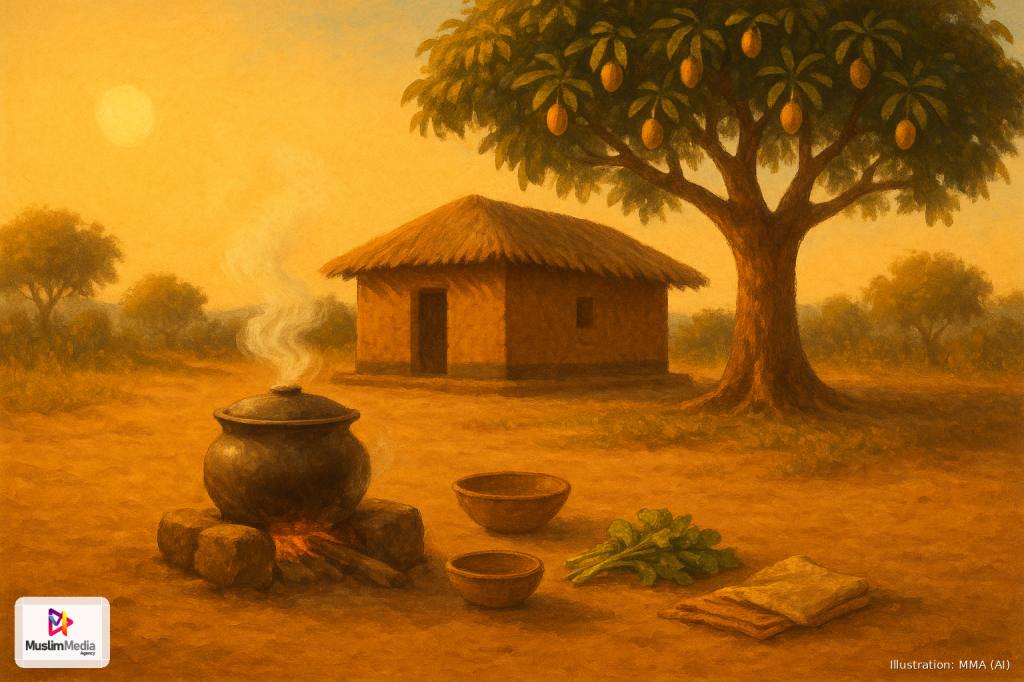
Most of us wake up already behind. Before the first cup of tea, the list has started. The salary that is not enough. The business that is slow. The relative who still has not paid back that money. By midday, we are exhausted and bitter, and we cannot even explain why, because we slept, we ate, we are alive and walking. Something in our accounting is wrong.
Islam names this problem plainly. It is not poverty. It is a habit of counting the wrong things first.
The Quran reminds us, in Surah Ibrahim, that if we try to count the blessings of Allah, we will not be able to enumerate them. This is not a poetic flourish. It is a practical instruction. Before you sit with your list of complaints, sit with your list of gifts. You will run out of paper before you finish.
The Prophet Muhammad, peace be upon him, addressed this human tendency with characteristic wisdom. He encouraged believers to look at those who have less than them in worldly matters, not at those who have more. The reasoning is simple and sound. When you compare yourself upward, you always feel poor. When you look at those struggling more than you, you begin to feel the weight of what you actually hold in your hands.
This is not a call to laziness or to accepting injustice quietly. Islam is not a religion of passivity. We are encouraged to work, to plan, to seek halal provision with full effort. But effort and gratitude are not opposites. A farmer plants seeds and works the soil, but he does not forget to thank Allah for the rain. The trader opens her stall every morning and negotiates hard, but she does not forget that the customers who walked through were sent by Allah, not conjured by her own cleverness alone.
The concept of shukr, gratitude, is not a side teaching in Islam. It sits at the centre of how a Muslim is supposed to engage with life. Allah says in the Quran that if you are grateful, He will increase you. This is a promise tied to a practice. The practice is counting what you have. The reward is more of it, and more peace within what you already hold.
What makes this especially sharp for us as Malawian Muslims is that we live in a society where comparison has become very easy. We see what others have on the phone before we have even said our morning prayers. We hear about salaries, about cars, about which family went where for Eid. That kind of noise can make a person forget that clean water from a tap, a mobile phone and children in school are not small things. They are the prayers of ancestors who never had them.
Contentment in Arabic is qana'ah. The scholars have described it as a treasure that does not run out. It is not the same as having everything. It is the feeling of sufficiency that comes when you stop treating your blessings as background noise and start treating them as the main story. A person with qana'ah can lose things and recover without collapse, because their sense of enough was never tied only to what they owned.
This does not mean we stop making dua for more, or stop working toward better circumstances for our families and our communities. It means we do not wait for more before we feel at peace. It means the gratitude comes first, before the asking. It means we walk through this life as people who know they are already held, not as people who are perpetually one blessing short of feeling okay.
The arithmetic Islam teaches is different from what the world teaches. The world says: add up your problems and that is your reality. Islam says: add up your blessings and that is your reality. Both are true counts. The question is which one you start with, because the one you start with is the one that shapes everything that follows.
Comments
Be the first to comment.
Related Stories
The Scholar Who Never Got a Certificate and What Islam Says About the Knowledge He Still Carries
Birr al-Walidayn Is Not a Feeling. Islam Describes It in Hours, Dirhams and Presence.