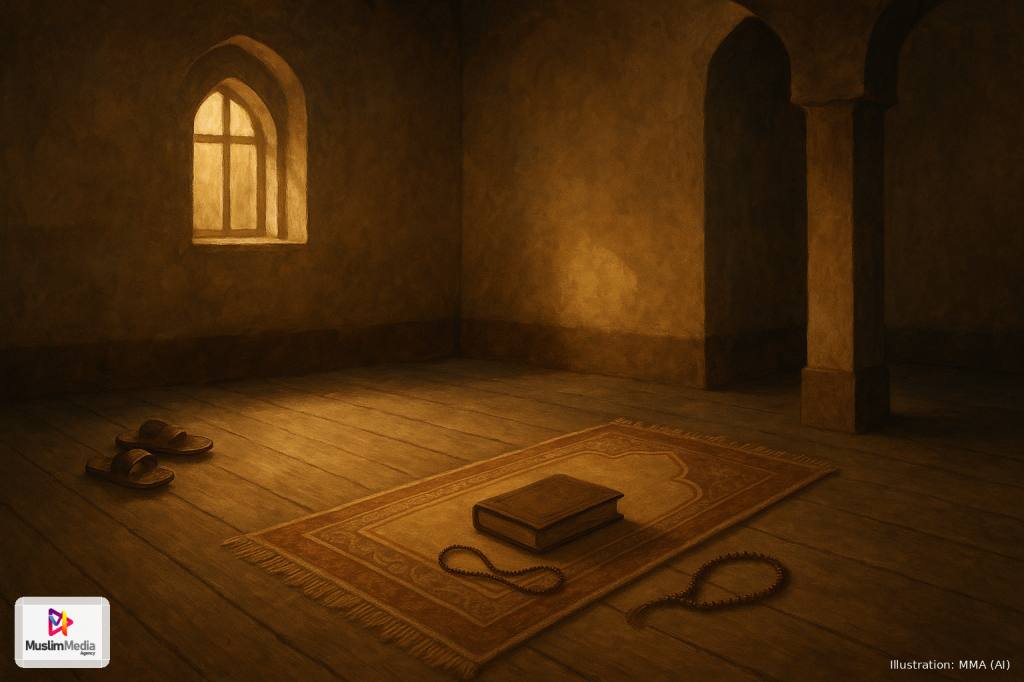
Kibr Is the Sin Nobody Talks About Because Everybody Has It
Pride is the one sin we rarely confess, rarely name, and almost never see in ourselves. That is precisely what makes it so dangerous.

Nobody wants to talk about kibr. Not because scholars have overlooked it, and not because we lack the Arabic vocabulary. We don't talk about it because the person who raises it is usually as guilty as everyone else in the room, and we all sense that, even if we say nothing.
We talk freely about dishonesty. We name laziness. We warn each other about lust and greed. But pride sits quietly in the corner, untouched, because calling it out requires a self-awareness that pride, by its very nature, destroys. That is the trap. The sin protects itself.
The Prophet Muhammad, peace be upon him, is reported to have said that no one who has even a mustard seed's weight of kibr in their heart will enter Jannah. Not a mild caution. Not a polite suggestion. A warning that should stop every one of us cold. Yet most of us hear it, nod solemnly, and assume it applies to someone else. The man who was rude at the masjid last week. The businessman who never greets the poor. The scholar who talks over everyone. Not us. Never us.
That reflex, that instant redirection of the warning toward someone else, is itself a symptom of kibr. Sit with that for a moment.
Kibr is not only the loud, strutting arrogance of a man who believes he is better than everyone around him. That version is easy to spot and easy to condemn. The more common kind is quieter. It is the brother who cannot take correction because being wrong feels unbearable. It is the sister who volunteers her opinion constantly but shuts down the moment someone offers a different view. It is the elder who believes his age exempts him from accountability. It is the young man who has memorised a few ayat and now speaks to older people as though they know nothing. It is all of us, at different times, in different rooms.
In Malawi, as in many Muslim communities, we carry extra layers of this. There is pride wrapped around ethnicity, pride tied to family name, pride attached to how long one's family has been Muslim. There is the pride of those who studied abroad versus those who learned at home, and the pride of those who learned at home who resent those who studied abroad. We have dressed our kibr in cultural clothes and taught ourselves to call it dignity, or tradition, or self-respect. It is rarely any of those things.
What makes kibr especially corrosive in a community is that it blocks the very things a healthy ummah needs. It blocks honest conversation, because honest conversation requires a willingness to hear something unflattering about yourself. It blocks reconciliation, because reconciliation often means someone takes the first step without demanding recognition for it. It blocks learning, because learning means admitting you did not already know. A community full of people quietly protecting their pride is a community that cannot grow, cannot heal, and cannot hold itself accountable.
The antidote the scholars point to is tawadu, humility. But humility has been softened into something almost decorative. People say they are humble the way they say they are fine, as a reflex, without checking whether it is actually true. Real tawadu is uncomfortable. It means genuinely not needing to win the argument. It means being corrected by someone younger and thanking them for it. It means doing a good deed and not needing anyone to notice. Most of us find that genuinely difficult, and that difficulty is exactly the point.
The amanah of self-knowledge is harder than almost any other trust we carry. It requires us to watch ourselves with the same critical eye we use on everyone else. It requires us to ask, when we feel slighted or dismissed or overlooked, whether the problem is truly with the other person or whether our own pride has made us impossible to reason with.
None of this is easy to write, because writing it does not exempt the writer. The columnist who sits down to talk to a community about pride is not standing outside the problem. I am in it, as most of us are. The difference, perhaps, is just being willing to say so.
If kibr is the sin nobody talks about because everybody has it, then the first act of courage is simply to name it. Out loud. In the mirror. Before we go looking for it anywhere else.
Marshall Dyton
Comments
Be the first to comment.
Related Stories
The Scholar Who Never Got a Certificate and What Islam Says About the Knowledge He Still Carries
Birr al-Walidayn Is Not a Feeling. Islam Describes It in Hours, Dirhams and Presence.