MAM Elections: The Empty Chairs Will Also Vote
Two withdrawals, one public plea and a trail of frightened delegates: the MAM election has a problem money alone did not create.
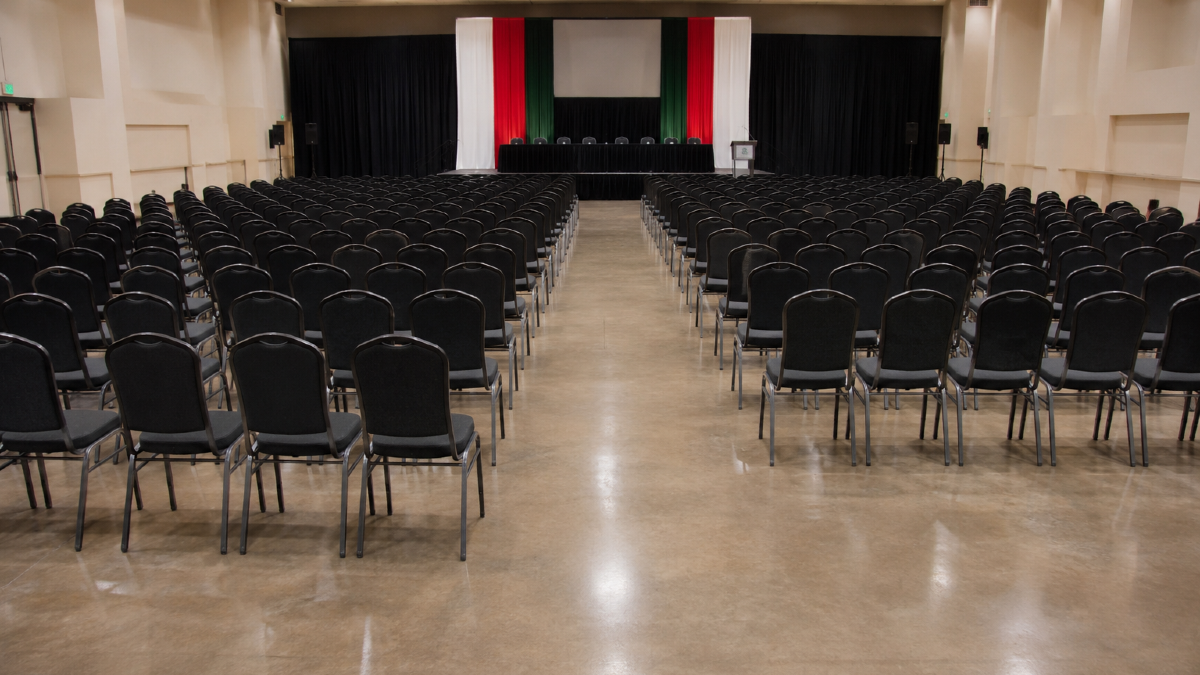
Something quiet and sad is happening on the road to the Muslim Association of Malawi elections. It is not a scandal you can photograph. It is an emptying.
Two men who dreamed of serving this community have folded their papers and gone home, and this time we know why, because they told us, with their names attached. Arafat Nkata looked at the K5 million nomination fee set for this election and withdrew, he says, not because he could not pay, but because he would not:
"Leadership in our institutions should be accessible to every qualified and deserving person, regardless of financial capacity." He would rather spend such money, he said, on the welfare of our scholars.
Adil Chilungo bowed out gracefully to keep serving where he already serves in Islamic education, in the Islamic finance work with the Reserve Bank—preferring to help the association without sitting in its chair.
Honour them both. And then sit with what their departures tell us.
This week, a third aspirant stopped whispering. In a public statement titled "Say No to Oppression and Intimidation," Omar Nkachelenga said he collected his nomination forms on 26 June and that securing the required endorsements took him thirteen days and K1,224,800 of his own money before he could present his papers at the MAM Secretariat in Blantyre.
He wrote it in Chichewa too, so no one could miss it: "Ngakhale kuti Chisilamu chimaletsa kupondereza…" even though Islam forbids oppression, he said, this is what it took.
When MMA reached him, Nkachelenga was clear about where the money went: transport, food and accommodation. Thirteen days on the road, district to district, in pursuit of signatures that should take an afternoon. And why the pursuit? His answer should stop every Muslim in this country: the delegates who could endorse him were afraid to sign.
Not opposed to him. Not backing another man. Afraid.
Now do the arithmetic of this election, all of it. Five million kwacha at the gate. More than a million more on the road, by one candidate’s public count, because signatures were frightened. In a community where many families live on a fraction of that in a year, we have priced the service of the Ummah like a luxury good. Nkata said it in the gentlest possible way. This column will say it plainly: a poor man with a good heart cannot enter this race.
And here the trustees deserve to be heard in full, because when MMA asked about the fee, Sheikh Kennedy gave a complete account. It was not imposed from above, he said: at a general meeting, delegates themselves debated proposals ranging from no fee at all, to one million, to 2.5, to five, to 7.5 million and voted. The majority chose five. There is precedent, too: a K1 million fee in the 2016 election, a decade of hard kwacha ago. The figure, he said, covers logistics and shows an aspirant "is serious to compete in that high office." A resolution of the general meeting is binding. It is a fair answer, fairly given, and we print it in full spirit.
And yet the question survives the explanation. A majority can vote a gate taller; that does not change who is left standing outside it. The vote was shura in form but shura that prices the poor out of service has honoured its procedure and wounded its purpose. In 2016 the gate stood at one million, and the association found serious leaders. What we ask is modest: that between elections, the House study what its gates cost it not in kwacha, but in the Nkatas who look at the price of serving and, on principle, decline to pay.
Sit with the fear, too. In an association built on "speak the truth even if it is bitter," men entrusted with a community’s election could not put their names to a routine form without fear of what it might cost them. Nkachelenga says he knows where the fear comes from; this column does not need the name. The fear itself is the story. Fear does not grow in healthy soil.
When MMA put the fear claims to the Board of Trustees, which superintends this election under the constitution, its chairperson, Sheikh Ali Kennedy, said he could not comment: endorsement, he noted, is a delegate’s right, and each delegate chooses whom to endorse. He is correct and that is precisely the point. A right exercised freely looks like choice. A right exercised under fear looks like silence.
What Islam says about wanting the chair
Our tradition holds two teachings in tension, and this election is caught between them.
The first: leadership is not to be chased. When Abdur-Rahman ibn Samurah asked for a position, the Prophet, sallallahu alayhi wa sallam, told him that the one who is given authority after seeking it is left alone with it, while the one who receives it without asking is helped. A contest so punishing that rivals feel they cannot breathe is not a good sign in any organisation. In an Islamic one, it should stop us cold.
The second: intimidation is oppression, and oppression is darkness. The Messenger of Allah, sallallahu alayhi wa sallam, warned that dhulm will be darkness upon darkness on the Day of Resurrection. A signature withheld out of fear is a small dhulm with a long shadow: it falls on the aspirant, on the delegates carrying the fear, and on every Muslim whose choices narrow because good men could not reach the ballot.
A victory that arrives in an empty hall is not a mandate. It is an echo.
The promise, and the paper it should be written on
Here, to their credit, the trustees have now spoken and spoken well. Answering this newspaper’s questions ahead of the vote, Sheikh Kennedy did not hedge on whether delegates would face any consequence for endorsing any aspirant: none, he said. No removal. No exclusion. "It’s their right, it’s their choice."
Delegate carry those words with you like a document. They were said publicly, to this newspaper, by the man superintending your election under a constitution the courts have affirmed. If any hand tries to make you afraid between now and 26 July, you hold the trustees’ own promise that your fear has no constitutional basis. And we, for our part, will hold them warmly to it.
Sheikh Kennedy also reminded us of the road here: the injunction of 2021, the annulled election, five years of tension ended by the court’s ruling that the 1994 constitution, loved by some, disliked by others is the only one there is. "What can we do? We have to follow what the court said." He is right. And an election held under a court-affirmed constitution carries a special duty: it must not only be clean, it must be seen to be clean, because it is the community’s one chance to close five years of argument with something everyone can respect.
The question that remains
So suppose the most charitable reading of everything. Suppose the fee has sober reasons and the thirteen days were administrative confusion. Even then, two facts remain on the record, with names attached: a qualified man walked away saying leadership has been priced beyond principle, and another says men were afraid to sign. And so the question this column exists to ask:
What kind of leaders will an election like this select for, and what kind has it already selected out?
A healthy institution makes candidacy an honour. Ours has made it an ordeal measured in millions and in fear. When capable people conclude the process is not worth their dignity or their savings, the community does not lose two candidates. It loses the habit of hoping. Young Muslims watching from the back rows are taking notes about what leadership costs here, and some are quietly deciding never to offer themselves. That is the real ballot being cast this month, and its results will last twenty years.
What would restore our hearts
The repair is not complicated, and part of it has begun. The assurance is given; let it be repeated in the hall on 26 July before a single vote is cast. Let the delegate roll and the nomination requirements be published for all to see. The fee, for its part, has now been explained, voted by the delegates themselves, with precedent and an explanation freely given is its own small sunlight. Let every aspirant who withdrew be honoured, not whispered about. And let whoever wins, whoever it is, win in a hall so full of scrutiny that his mandate is beyond question. The man most protected by a clean election is the victor himself.
To every delegate travelling to vote: you carry more than your own opinion. You carry an amanah from people who will never enter that hall. One brother paid a toll of thirteen days and a million kwacha. Two brothers concluded the gate itself was the problem, and left with their dignity intact. The trustees have promised, through this newspaper, that no fear was ever necessary.
So in that hall, let your hand be the freest thing in the room. Vote in a way you could defend to the widow in Mangochi, the madrasa boy in Karonga and to Allah, before Whom no hall is closed, no fee is hidden, and no fear is excused.

Marshall Dyton
Analysis of political developments affecting Muslims in Malawi
View profile & all articles →Comments
Be the first to comment.