The Angry Man Who Prays Five Times a Day Has Not Yet Understood What He Is Saying
Salah is not a ritual to complete. It is a conversation with Allah. If it changes nothing in your character, ask yourself whether you are truly present.

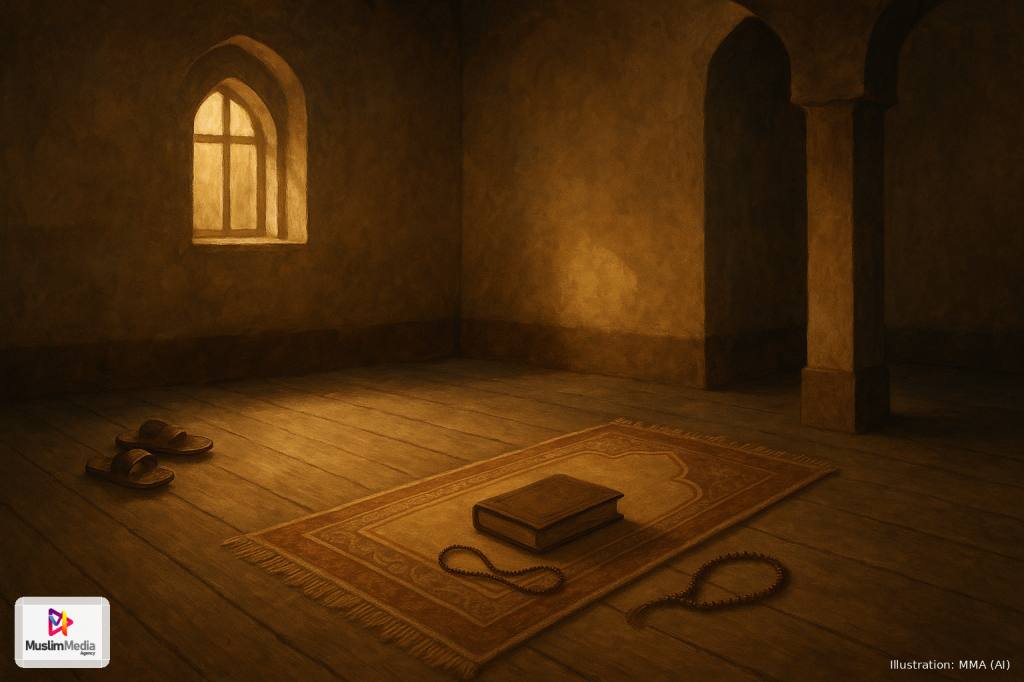
We know him. Maybe we are him on some days. He is at the masjid for Fajr before most of the neighbourhood is awake. He recites Surah Al-Fatiha with a beautiful voice. He straightens his rows. He makes his sujood with care. Then he walks out of the masjid, gets into an argument with a boda-boda rider over ten kwacha, and speaks to the man with such contempt that bystanders look away in embarrassment. By Dhuhr, he is back on his mat, palms raised.
This is not a small contradiction. It is a sign that something in our understanding of salah has gone badly wrong.
The Arabic word salah does not simply mean prayer in the way that English uses the word. It carries a meaning of connection, of nearness, of being in direct address before the Creator of everything. When we stand and say "Allahu Akbar" at the opening takbeer, we are not merely beginning a sequence of movements. We are declaring, in that moment, that Allah is greater than everything we were just worrying about, arguing about, or angry about. Greater than that driver. Greater than that colleague who annoyed us. Greater than our pride.
If we genuinely believed that, even for the seventeen rakaat we pray each day, something would change in us over time.
The scholars have long made a distinction between a salah that is performed and a salah that is accepted in the deeper sense of transforming the one who prays. Allah says in Surah Al-Ankabut, verse 45, that salah "forbids immorality and wrongdoing." That is not a poetic description. It is a functional statement. If your salah is not doing that work in you, the question is not whether you prayed. The question is whether you were present while you prayed.
Khushu, the quality of humble attentiveness in salah, is what separates motion from meaning. A man can complete one hundred rakaat with perfect physical form and leave untouched. Another man can pray two rakaat slowly, aware of every word, and stand up slightly different from how he sat down. The body can be in sajdah while the mind is settling a business dispute or rehearsing an argument. We have all experienced this. The honest among us will admit it is more common than we like to say.
But we should not stop at the internal. Salah is also a discipline of the schedule. Five times a day, at prescribed intervals, a Muslim is asked to stop whatever he is doing and reorient himself. The structure is not accidental. It is designed so that no stretch of the day is long enough for you to fully forget who you are and who you belong to. If a man spends the hours between Asr and Maghrib screaming at his employees, underpaying his workers, or treating his wife as if she is beneath him, then either he is not reflecting on what he said during Asr, or he said it without meaning a word of it.
This is not about being harsh with ourselves or with each other. It is about being honest. There is a mercy in this conversation, not a judgment. Allah knows we are weak. The Prophet, peace be upon him, told us that the believer is the one whose neighbour is safe from his tongue and his hand. That standard sits right next to the command to pray. They were never meant to be separate lives running in parallel.
The real danger is when salah becomes a credential rather than a practice. When a man's five daily prayers become the reason he believes himself to be a good Muslim regardless of how he treats people. At that point, the prayer has become a kind of spiritual accounting trick, a way of feeling covered, rather than a genuine turning toward Allah. The Quran warns, in Surah Al-Maun, about those who pray but are heedless of their prayer. Heedless does not mean they forgot to pray. It means they prayed without the prayer meaning anything to them.
We are a community that takes the form of our deen seriously, and that is not nothing. Keeping the prayer times, maintaining wudhu, going to the masjid: these are real goods. But form without substance is a house with beautiful walls and no foundation. It looks fine until pressure comes.
The work is to close the gap between the man on the prayer mat and the man on the street. Not perfectly, because none of us will ever be perfect. But consistently, with intention, and with the humility to notice when the gap is growing instead of shrinking.
Next time you say "Allahu Akbar" to open your salah, pause for just one second before you recite. Let the words land. Allah is greater. Greater than your anger, your impatience, your ego, and your certainty that you are right. If that lands, even a little, you have begun to understand what you are saying.
Marshall Dyton
Comments
Be the first to comment.