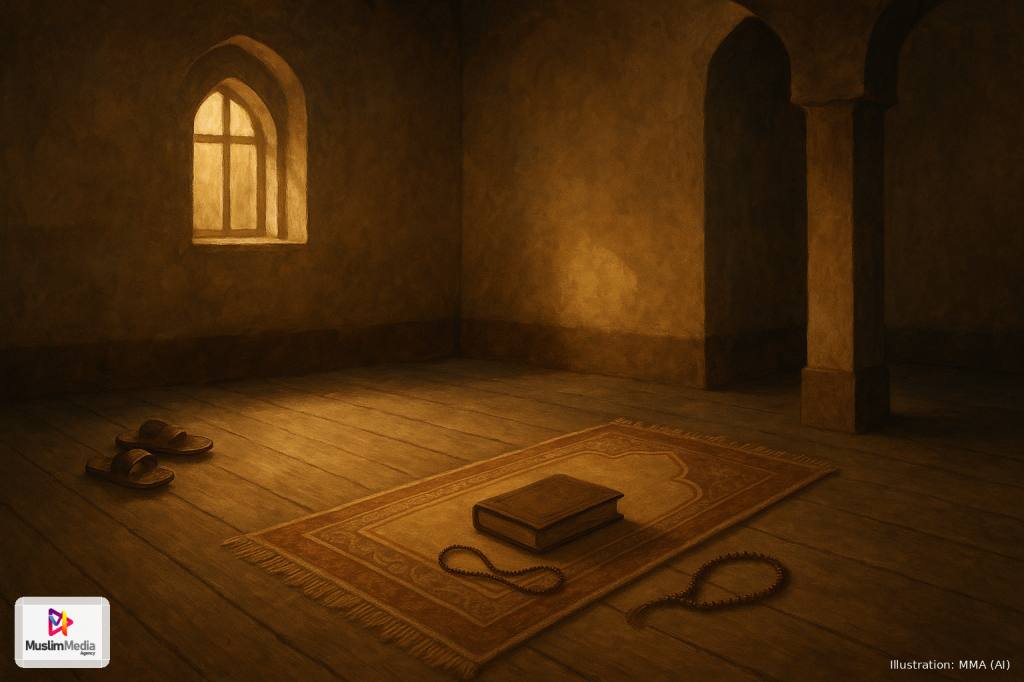
The Family Is the First Mosque, and Hard Times Are Testing It
When poverty, distance and daily pressure wear down the home, the whole Ummah feels it. We must treat the family as the sacred institution it is.

There is a masjid in every Muslim home. It may not have a minaret or a mihrab, but it has something more immediate: a father who leads his children in Fajr, a mother who teaches her daughter to cover with dignity, grandparents who carry the old supplications on their lips without being asked. That is a mosque. That is, in fact, the first mosque any of us ever entered.
We spend considerable energy debating the state of our masjids, our Islamic schools, our community institutions. Those conversations matter. But we do not speak nearly enough about what is happening inside our homes, behind closed doors, where the real formation of Muslim character takes place every single day.
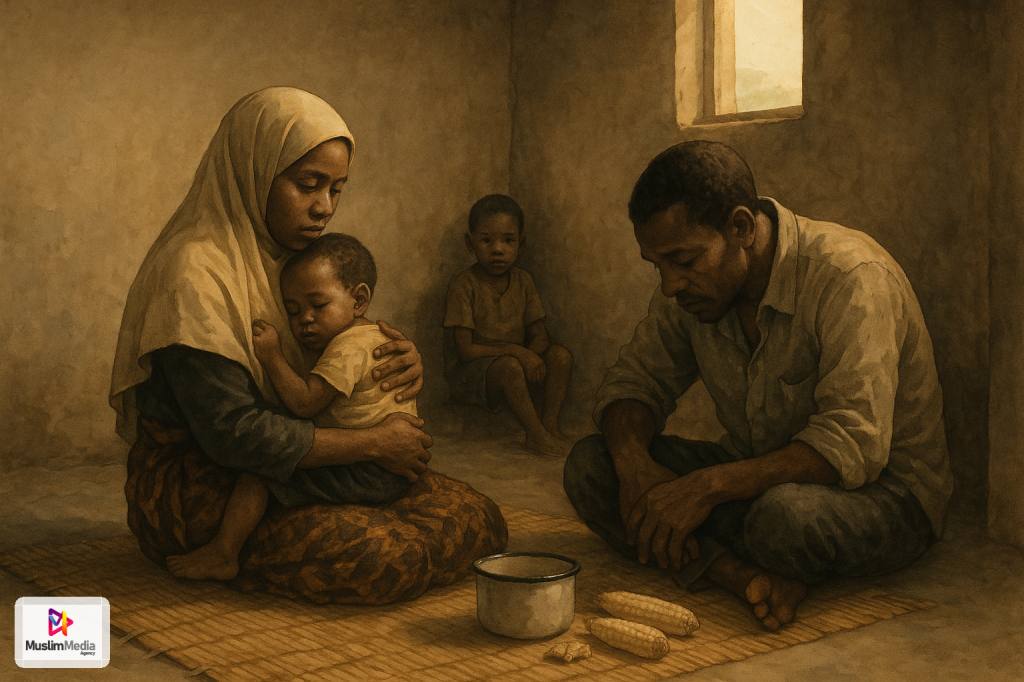
Hard times have a way of exposing what was already fragile. When a man cannot feed his family, something shifts in that house. When a woman carries the full weight of a household on her own, something bends. When young people leave their villages for work in the city and return as strangers to their parents, something is quietly broken. These are not abstract concerns. These are the ordinary pressures bearing down on Muslim families across Malawi right now, and they are doing damage that no amount of Friday khutbah can undo if we keep treating the home as someone else's business.
Our tradition does not treat the home that way. The Prophet, peace be upon him, is reported to have said that the best of you is the best to his family. That is not a gentle encouragement. It is a standard. It places the family at the centre of a man's deen, not at the edges of it, not as a private matter to be sorted out after the public duties are done. The home is a spiritual obligation, and neglecting it is a religious failure, not merely a social one.
What does neglect look like in practice? It looks like fathers who are physically present but emotionally absent, sitting through the evening hours without a word of warmth to their children. It looks like mothers who are so exhausted by survival that they have no energy left for tarbiyah, for the patient, repeated work of raising children who know Allah. It looks like teenagers who are getting their understanding of manhood or womanhood from their phones rather than from anyone in their family who has actually lived. These are common situations. Naming them plainly is not an attack on anyone. It is the beginning of honesty.
The pressures are real and we should not pretend otherwise. Poverty is not a character flaw. Distance is sometimes unavoidable. Exhaustion is not laziness. A man who walks four hours a day to find work and returns with nothing has not failed his family on purpose. But acknowledging hardship does not mean we accept its effects without a fight. The question is what we protect, even under pressure. The Prophet's household knew hardship intimately, and it remained a household of mercy, of laughter, of deliberate goodness toward one another.
We can do small things with serious intention. A father who cannot provide abundantly can still sit with his children before bed and ask them what they learned today. A mother who is bone-tired can still greet her family with a word that does not cut. Older siblings can carry some of the load of teaching the younger ones. These are not luxuries reserved for comfortable households. They are choices, made within whatever space is available.
Our imams and community leaders have a role here too. The khutbah that speaks only about eschatology and never about the practical life of a Muslim family is leaving people without guidance where they need it most. There is nothing lesser about addressing how a husband should speak to his wife, or how a family should handle debt, or what to do when a son is drifting. These are matters of deen. They deserve the minbar.
As a community, we hold amanah over one another. That trust extends to the families around us. The widow managing alone, the young couple struggling in their first year of marriage, the elderly parent whose children have moved away and forgotten to call. These are our people. Checking on them, including them, refusing to let them disappear, that is part of what it means to be an Ummah and not merely a crowd that prays in the same direction.
The home is where Islam either lives or dies in the next generation. We can build as many institutions as we like, but if the family breaks, the institutions inherit broken people. Let us take the home as seriously as we take everything else we call sacred.
Marshall Dyton
Comments
Be the first to comment.
Related Stories
The Scholar Who Never Got a Certificate and What Islam Says About the Knowledge He Still Carries
Birr al-Walidayn Is Not a Feeling. Islam Describes It in Hours, Dirhams and Presence.