The Scholar Who Never Got a Certificate and What Islam Says About the Knowledge He Still Carries
A man can spend decades studying Deen and never hold a paper to prove it. Islam has never needed the paper to validate the knowledge.
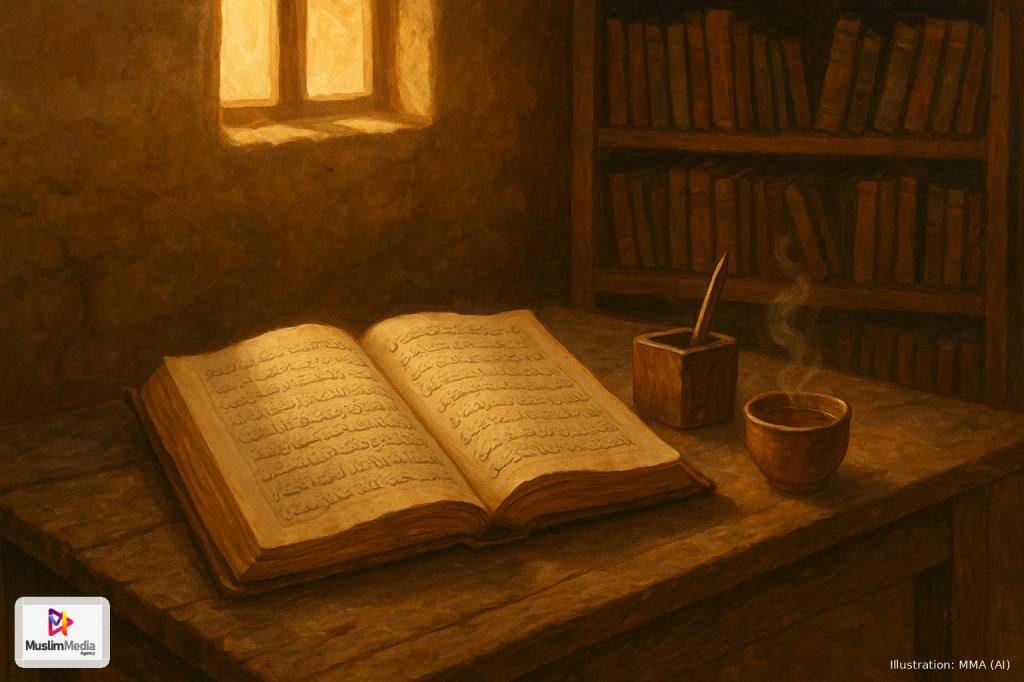
There is a certain kind of man you will find in almost every mosque in Malawi. He sits near the front, knows the rulings, corrects recitation gently without embarrassing anyone, and can trace the chain of thought behind a fatwa back through centuries of scholarship. But he has no certificate. He never sat in a formal madrasa long enough to graduate. He may have studied under a sheikh who himself had no institutional affiliation. He learned the way knowledge used to travel, from mouth to ear, from text to mind, across years of quiet effort.
And somewhere along the way, the world decided his knowledge did not count.
This is a column about that decision, and why we ought to push back against it.
What the tradition actually says
Islam did not begin with certificates. The Companions of the Prophet, peace be upon him, carried knowledge because they had received it, sat with it, lived it, and passed it on. The isnad, the chain of transmission, was the original credential. What mattered was who taught you, whether they were trustworthy, and whether what they passed on was sound. A piece of paper was never part of that equation.
The classical scholars understood this. They traveled for years to sit at the feet of a single teacher. They studied in mosques, in private homes, under trees. When Ibn Battuta moved across the Muslim world, he encountered scholars in circumstances that no modern institution would recognise, yet their knowledge was received as legitimate because the chain was intact and their character was sound. The tradition has always been more interested in the quality of what a person carries than in the institution that stamped their name.
This does not mean that formal education is worthless. Madrasas and Islamic universities have produced generations of scholars who have served the Ummah well, and we should honour that. But the formal system is not the only system, and mistaking the map for the territory is a quiet error that costs us dearly.
What we lose when we dismiss the uncertified scholar
When we treat a certificate as the only mark of legitimacy, we create two problems. First, we shut out real knowledge. A man who has spent thirty years reading fiqh, memorising hadith, and sitting with learned elders carries something genuine. Dismissing him because he has no paper is not intellectual rigour. It is credential worship, and it has no basis in our tradition.
Second, and perhaps more dangerous, we clear the space for people who do have certificates but very little else. A piece of paper from an institution tells you that a person passed an examination at a particular point in their life. It does not tell you about their character, their continued learning, their humility, or the depth of what they actually understand. We have seen, in communities across the Muslim world, what happens when formal titles carry more weight than actual substance. The results are rarely good.
In Malawi, where Islamic scholarship often develops outside formal structures, this question is not abstract. Many of our most trusted community teachers learned in informal settings. Their knowledge has shaped how families conduct their affairs, how disputes are resolved, and how the faith is understood at the village level. Dismissing all of that because it did not come with a graduation ceremony would leave our communities poorer.
The amanah of knowledge is not diminished by the absence of a certificate. It is diminished by dishonesty, by arrogance, by refusing to keep learning, by using what one knows to manipulate rather than to serve. Those failures can happen to the certified and the uncertified alike.
What we owe the uncertified scholar is not automatic deference. That would be as careless as automatic dismissal. What we owe him is fair assessment. We assess by the soundness of what he says, by whether it can be traced to reliable sources, by whether his character supports what he claims, and by whether the community around him affirms his integrity over time. These are the standards our tradition actually gives us.
Credentials are a useful shortcut. They are not a replacement for that deeper assessment, and they were never meant to be.
The man sitting near the front of that mosque deserves to be heard on his merits. So does every person who has taken the knowledge of this Deen seriously, carried it carefully, and tried to pass it on faithfully, with or without a paper to prove it.
Comments
Be the first to comment.