
The Truth That Costs You Is the Truth That Counts
Islam does not reserve its praise for the easy kind of honesty. It reserves it for the kind that hurts to give.
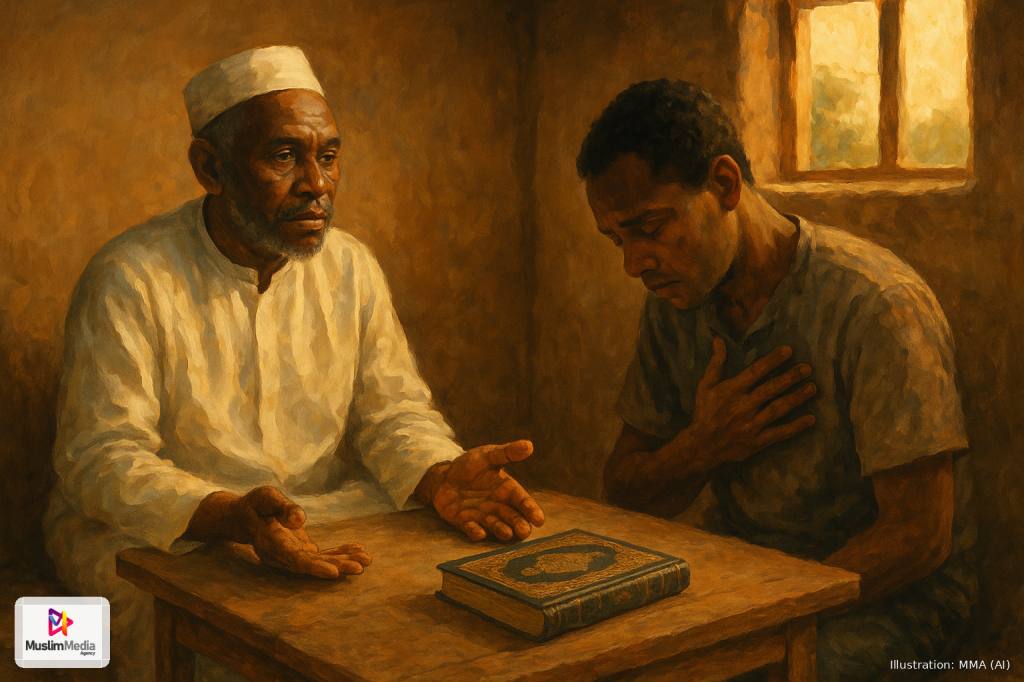
There is a version of honesty that costs nothing. You tell the truth when everyone agrees with you, when it flatters the powerful, when silence would have been just as comfortable. That kind of honesty is easy, and Islam is not particularly impressed by it.
What the faith actually demands is the other kind. The kind where you say what is right when saying it puts something at stake. Your job, your friendship, your standing in the community, sometimes your safety. This is what the Prophet, peace be upon him, described when he said that the best form of struggle is a word of truth spoken before a tyrant ruler. That hadith, well known and widely transmitted, does not speak of battlefield courage. It speaks of the courage of the mouth and the heart.
We Malawian Muslims know this teaching. We have heard it at jumuah. We have read it in Islamic literature. But knowing a teaching and living by it are two very different things, and we should be honest with ourselves about which one we mostly do.
The Quran is direct on this point. Allah commands the believers to be persistently standing firmly in justice, as witnesses for Allah, even if it be against yourselves or your parents or your close relatives. That verse from Surah An-Nisa carries a weight that most of us would prefer to set down quietly. Against yourselves. Against your parents. Against people you owe loyalty to. There is no escape clause for family pressure or social embarrassment or the fear of being called a troublemaker.
What makes truthfulness a serious Islamic obligation, and not just a nice quality to have, is precisely this condition of cost. Siddiq, the truthful one, was one of the highest titles the Prophet used for his companions. Abu Bakr earned it not because he never faced a moment where lying would have been easier, but because he consistently chose against that easier path. The title means something because it was tested.
In our communities, the tests come in ordinary forms. A business partner is doing something dishonest and you stay quiet because he is your cousin. A leader in the masjid committee makes a decision that harms the congregation and nobody speaks up because he is well connected. A friend is being wronged and you know it, but correcting the situation would mean confronting someone influential. In all these cases, the silence is not neutral. Silence in the face of injustice is itself a choice, and Islam accounts for it.
The Prophet, peace be upon him, also warned us about a specific trap, which is the person who speaks what people want to hear in order to gain something from them. There is a term for this in our tradition, and the scholars have discussed it at length. Flattery, deliberate distortion of truth for personal gain, saying what the powerful want said, these are not just moral failings. They are forms of betrayal of the amanah, the trust, that Allah placed in the human tongue.
None of this means we must be blunt to the point of cruelty, or that we should seek out conflict for its own sake. Islamic scholarship has always held that truth must be delivered with wisdom, with the right manner and timing. But wisdom is not a cover for permanent silence. There is a difference between choosing the right moment to speak and convincing yourself that the right moment will never come.
The scholars also make clear that the obligation to speak truth is proportional to capacity and circumstance. A person in genuine danger is given latitude that a person in comfort is not. But that latitude was meant for real hardship, not for the mild social discomfort of being unpopular or the vague anxiety of rocking the boat.
What Islam actually says, when you read it plainly, is that the truthful community is one where people trust each other because the words exchanged mean something. When everyone learns that those around them will say what is convenient rather than what is real, the whole fabric of the ummah begins to weaken. Trust erodes quietly, over many small silences.
We are at our best when our word is our word, when what we say in front of someone matches what we say behind them, when we do not dress fear up as diplomacy. That is the standard the faith sets. It is a high one, and it is meant to be.
Comments
Be the first to comment.