Islam Made Seeking Knowledge an Act of Worship Before Any University Ever Existed
Long before lecture halls existed, Islam declared the pursuit of knowledge a duty. We need to reclaim that spirit today.

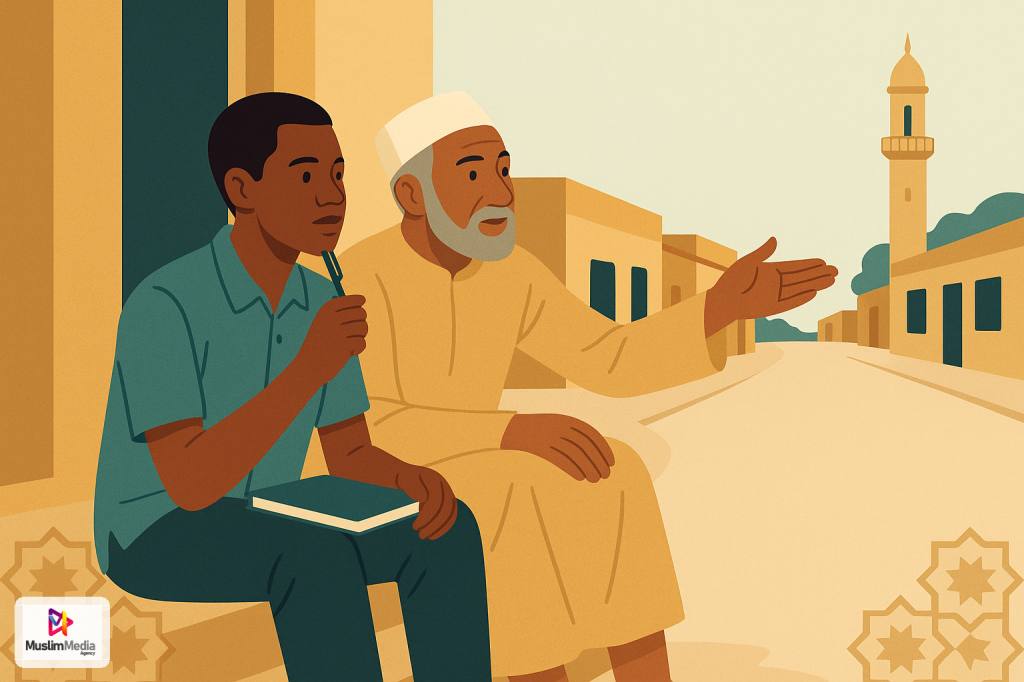
There is a tendency, especially among young Muslims in Malawi, to treat religion and education as two separate tracks. You study Islam at the madrassa. You study everything else at school. Never the two shall meet. This split has cost us more than we realise.
The Prophet Muhammad, peace be upon him, left no ambiguity on the matter. "Seeking knowledge is an obligation upon every Muslim." That hadith is not a motivational quote for a graduation ceremony. It is a command, placed alongside prayer, fasting and the other pillars of a Muslim life. Knowledge, in the Islamic frame, is worship. It always has been.
Consider the timeline. The first word revealed to the Prophet was not "pray" or "fast." It was "Read." Iqra. Before a single mosque was built, before the call to prayer rang out over any city, the Divine instruction was to read. To learn. To engage the mind. Islam did not treat the intellect as a threat to faith. It treated the intellect as a gift from Allah, one that carries its own amanah.
The great Islamic civilisation that flourished from Baghdad to Cordoba was not an accident of geography or politics. It was the direct fruit of a community that took this instruction seriously. Scholars of that era did not divide knowledge into "religious" and "secular." They studied medicine alongside theology, astronomy alongside jurisprudence, mathematics alongside Quran. They understood that every field of honest inquiry pointed back to the Creator. The hospitals they built and the texts they translated kept human knowledge alive during centuries when much of the world had stopped asking questions.
We need to sit with that history, not to feel nostalgic but to feel accountable.
Here in Malawi, the Muslim community has made genuine progress in education over recent decades. More Muslim children are completing primary and secondary school. More are reaching university. Islamic organisations have set up schools and bursary schemes. This is good, and it should continue. But progress in numbers alone is not the same as progress in spirit.
The real question is not how many of us are in classrooms. It is whether we carry into those classrooms the understanding that what we are doing is ibadah, an act of devotion. A Muslim student who sits down to study biology or law or accounting with the intention of serving Allah and the Ummah is earning reward. A Muslim student who drifts through the same course without that intention is simply collecting a certificate. The outward result may look the same. The inward reality is completely different.
This distinction matters because intention shapes effort. A person who believes their study is worship will push through difficulty differently. They will think about how their expertise can benefit their community. They will feel the weight of not wasting the opportunity. They will be less likely to cut corners, to cheat, or to abandon learning the moment it gets hard. Niyyah, the Islamic principle of intention, is not just a spiritual formality before prayer. It is a practical force that changes how we behave across everything we do.
Parents in our community carry a particular responsibility here. Many of our mothers and fathers sacrificed enormously to send children to school. That sacrifice deserves a richer conversation at home than marks and employment prospects. Children need to hear, from early on, that the Prophet valued knowledge so much that he instructed ransomed prisoners of war to teach ten Muslims each as the price of their freedom. That story alone should tell a child what Islam thinks education is worth.
Imams and sheikhs also have a role. The Friday khutbah can reinforce this without becoming a lecture on curriculum. Reminding the congregation that a nurse who learns her craft properly to save lives, or an engineer who builds roads that serve the poor, or a teacher who gives honest years to her students, are all in a form of worship, this kind of affirmation is not preaching at the choir. It is correcting a quiet misunderstanding that holds too many of us back.
None of this means every Muslim must pursue a university degree. The obligation to seek knowledge is broad. A farmer who learns better techniques to feed his family and his neighbours. A mother who reads about child health to protect her children. A tradesman who studies his craft deeply and works with honesty. These too are forms of the knowledge Islam commands. The point is the orientation, the commitment to keep learning, to keep asking, to keep improving, and to do it for Allah.
Islam did not wait for the university system to tell us that minds matter. We were told at the very beginning. The question now is whether we are listening.
Marshall Dyton
Comments
Be the first to comment.