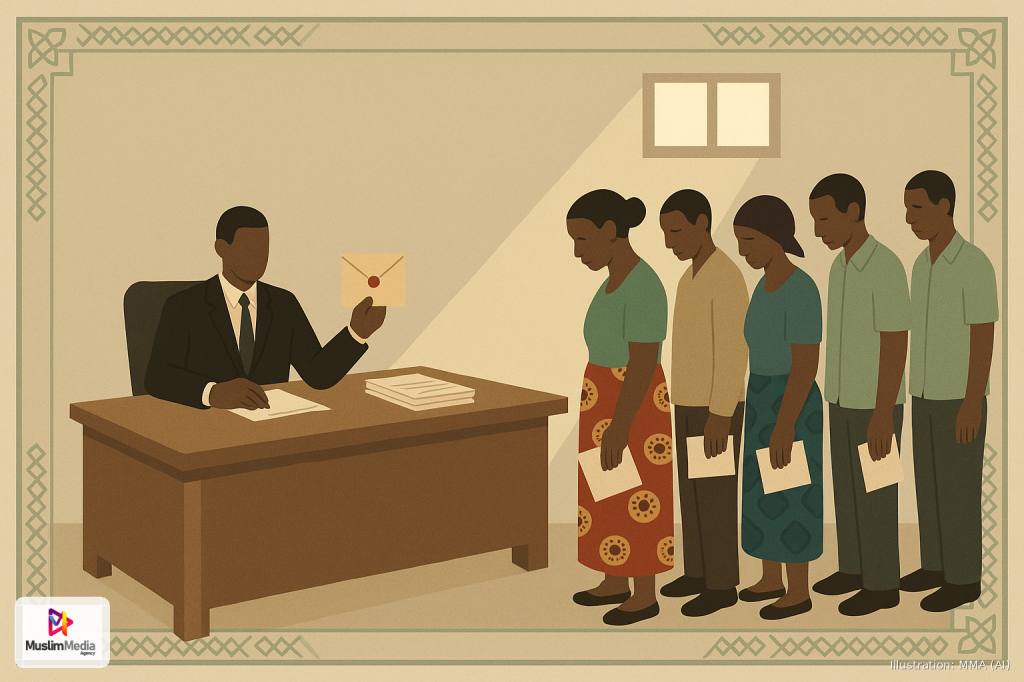
Saying Sorry Is Not Weakness. Islam Has Always Known This.
We live in a culture that treats apology as surrender. Our deen has always understood it differently.

There is a strange pride that has settled into how many of us handle conflict. We wrong someone, we know we have wronged them, and still we go quiet. We wait. We hope the matter dissolves on its own. And if anyone suggests we apologise, something inside us resists. As if saying sorry is a form of humiliation we cannot afford.
This is not an Islamic attitude. It never was. Yet it has crept into our communities all the same, dressed up as dignity or self-respect. We need to be honest with ourselves about what it actually is: ego, plain and simple.
Our deen places sincerity and accountability at the centre of a believer's character. The Prophet, peace be upon him, was reported to have said that the one who has wronged his brother should seek his pardon before the Day when there will be no gold or silver to ransom him. That hadith is not gentle background noise. It is a direct instruction about what we owe each other in this life. Apology is not a social nicety. It is an act of worship when done with the right intention.
Think about what a genuine apology actually requires. You have to admit you were wrong. You have to set aside whatever story you were telling yourself to justify your action. You have to put another person's dignity above your own comfort. None of that is weakness. That is courage of a very specific kind. The kind that the nafs, the lower self, fights hardest against.
We often confuse apology with defeat because we have absorbed a worldview that treats every human interaction as a competition. If I say sorry, I lose. If I lose, I am less. This thinking has nothing to do with Islam and everything to do with a culture of pride that our tradition has always warned us about. Kibr, arrogance, is listed among the gravest diseases of the heart. Its opposite, humility, is praised throughout the Quran and the Sunnah consistently and without ambiguity.
The Prophet, peace be upon him, was the most beloved of people and the most willing to make things right with others. His companions described him as someone who, when he had a disagreement, returned to the truth even when it meant acknowledging he had erred. He was the greatest of creation. And he modelled for us that accountability is not diminishment. It is character.
Now consider the practical cost of refusing to apologise. Marriages cool into silence. Brothers stop speaking at the masjid. Business partners part badly. Children watch their parents nurse grudges for years and learn that this is how adults behave. The damage spreads quietly across the ummah in ways we rarely sit down to calculate. A two-minute honest conversation, at the right moment, could have stopped most of it.
There is also something we must say about receiving an apology. The other side of this equation matters equally. When someone comes to us with a genuine sorry, we sometimes hold it at arm's length. We rehearse our grievance one more time. We make them feel that their apology was not quite enough, that we will need more time, more proof. Islam calls us to something better than that. To pardon is preferred, the Quran tells us. Allah loves those who overlook the faults of others. Receiving an apology with grace is its own form of ibadah.
This does not mean we accept dishonest apologies or that we ignore repeated harm disguised as remorse. Wisdom applies. But when someone comes sincerely, hand outstretched, the Islamic response is to meet them there. Not after we have made them sufficiently uncomfortable, but genuinely and without conditions.
We are a community with real pressures. Economic stress, family tensions, community politics. These things rub people against each other every day. What keeps us from fracturing is not the absence of conflict, because conflict is part of life. What keeps us together is the willingness to repair. And repair almost always begins with two words that cost nothing except pride.
Saying sorry is not surrender. It is the act of a person who understands that their relationship with Allah and their relationship with people cannot be separated. It is the act of someone who takes the amanah of brotherhood and sisterhood seriously. It is strength dressed in humility, which is the only kind of strength our deen has ever asked us to carry.
Comments
Be the first to comment.