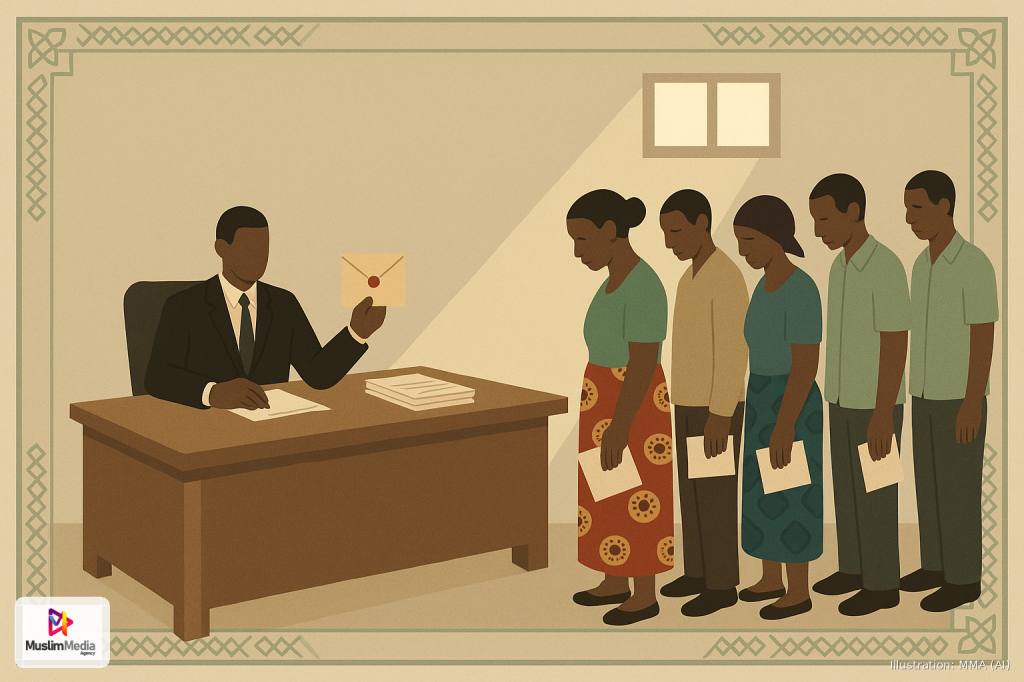
When the Kwacha Does Not Stretch Far Enough
Prices rise, wages stay still, and the month runs out before the money does. Islam has always had something to say about living in that gap.

There is a particular kind of exhaustion that comes not from working too hard but from counting. Counting what is left in the wallet after flour, after school fees, after the small debts you promised yourself you would clear this month. Many of us in Malawi know that exhaustion intimately. The kwacha buys less than it did. The market is punishing. And the gap between what we earn and what we need can feel like it is widening every week.
In those moments, the temptation is to measure our lives against what we do not have. We look at a neighbour's new roof, a cousin's car, the phones people are carrying at the mosque gate on a Friday, and we feel a quiet shame that has no good reason to be there. That shame is not from Allah. It is from a culture that has decided a person's worth is the sum of their visible possessions.
Islam has never agreed with that culture. The Prophet, peace be upon him, taught that true richness is not an abundance of worldly goods but richness of the soul. That is not a consolation prize for the poor. It is a reorientation of what we are actually chasing. Qana'ah, the Arabic word usually translated as contentment, is not about passivity or giving up on improving your circumstances. It is about refusing to let your circumstances define your inner state.
This matters practically. A person consumed by what they lack makes poor decisions. They borrow beyond their means to appear comfortable. They buy things on credit to silence an embarrassment that credit cannot actually cure. They work in ways that pull them away from salah, from family, from the very things that give life its texture, all in pursuit of a number in an account that never quite feels like enough. Qana'ah interrupts that cycle. It says: assess what you have honestly, be grateful for it sincerely, and then plan your next step with a clear head rather than a panicked one.
Gratitude, shukr, is not a soft feeling. It is a discipline. The Quran tells us that if we are grateful, Allah will increase us. Scholars across generations have read this not only as a promise of material increase but as a statement about perception. When we practise gratitude, we begin to see the provision that was already there and that anxiety had hidden from us. The family that still sits together at a meal of nsima and relish. The health that lets you wake up and go to work. The community at the masjid that would come if you called. These are not small things. We just stop seeing them when we are staring at a price tag.
None of this means we should accept injustice or stop striving. Islam is equally clear that seeking halal provision is an act of worship. Working hard, trading honestly, planning carefully, these are all ibadah. A Muslim is not meant to sit in resignation and call it tawakkul. Tawakkul, true reliance on Allah, is tying your camel first and then leaving the outcome to Him. You do your part with full effort. You just do not destroy your peace waiting to see the result.
The practical application in a household stretched thin is simpler than it sounds. Sit with your family and be honest about what is there. Remove the pretence. Many Muslim families in Malawi carry financial stress in silence because saying out loud that money is short feels like admitting failure. It is not failure. It is a test, and the Quran is quite direct that we will be tested with fear, hunger and loss of wealth. Acknowledging that reality is the beginning of managing it with dignity, not the end of dignity.
Then spend according to what is, not according to what you wish were true. The Prophet warned against extravagance and against miserliness. The path is moderation, wasatiyyah, and that path is actually more sustainable than either extreme. You can live decently on less than you think if you are honest about your priorities and if you have extracted your self-worth from your spending power.
The kwacha will keep fluctuating. Prices will not always be kind. That is the nature of this world, and no column can change it. What can change is the internal relationship we have with our own provision. Islam does not promise Muslims a life without financial pressure. It offers something arguably more useful: a framework for holding that pressure without being broken by it. Qana'ah is not poverty dressed up in religious language. It is a form of freedom that money cannot buy and hardship cannot take away.
Comments
Be the first to comment.