Zambia Votes Tomorrow — And Malawi Cannot Look Away
Zambia goes to the polls Thursday in a closely contested election. A Malawian is heading the SADC observer mission in Lusaka.
Zambia goes to the polls today, and the outcome will be felt far beyond Lusaka. For Malawi, its northern neighbour and one of its most important trading partners, this is not a distant foreign contest. It is an election with direct consequences for prices, for stability, and for a Malawian statesman standing at the very centre of it.
Polling stations across Zambia open at 06:00 and close at 18:00. Voters are choosing not only a president but Members of the National Assembly, local councillors, council chairpersons and mayors, in an election the Electoral Commission of Zambia has confirmed proceeded from a valid slate of nominated candidates.
At the top of the ballot, the contest has narrowed to two men. Incumbent President Hakainde Hichilema of the United Party for National Development is seeking a second and final term, five years after he defeated Edgar Lungu to win power in 2021. Fourteen candidates are on the ballot in all, but the race has effectively become a straight fight between Hichilema and Brian Mundubile, the presidential candidate of the Tonse-Pamodzi Alliance, a broad opposition grouping with roots in the former ruling Patriotic Front.
The two men are asking Zambians to judge them on very different arguments. Hichilema is campaigning on his economic record. By his own account, his government has restructured the bulk of Zambia's sovereign debt and carried out a large-scale recruitment drive across the public sector. Mundubile, a lawyer and veteran politician who served as leader of the opposition in parliament, is betting on something more immediate and more personal to voters: frustration over the rising cost of living. It is the familiar and powerful question at the heart of many elections. Do voters reward a leader for the reforms he points to, or punish him for the prices they feel every day at the market? Zambians will answer that today.
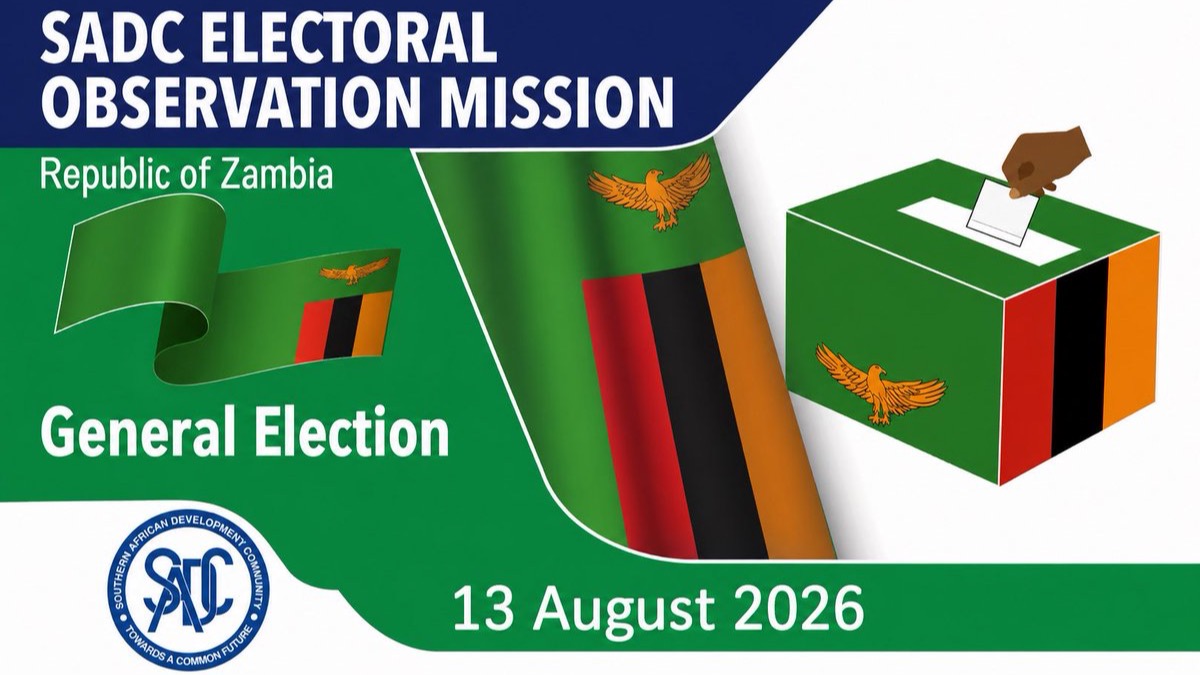
For Malawi, the stakes are not abstract, and they are not only economic. A Malawian is helping to oversee the integrity of the entire exercise. Samuel B. Tembenu, a Senior Counsel and former Minister of Justice and Constitutional Affairs, is leading the SADC Electoral Observation Mission in Lusaka. He was appointed to the role by President Arthur Peter Mutharika, in Mutharika's capacity as Chairperson of the SADC Organ on Politics, Defence and Security Cooperation. The mission is a serious undertaking. It brings together 106 personnel from 10 SADC member states, and has deployed observers across all 10 of Zambia's provinces. Tembenu is due to present the mission's preliminary statement on 15 August.
At the mission's launch, Tembenu framed the work as part of the region's larger democratic project. The exercise, he said, was "a demonstration of SADC's continued commitment to strengthening democracy, constitutional governance and peaceful elections across the region." He urged registered voters to exercise their civic right peacefully, and he made a specific appeal to young people to stay clear of political violence. It is an appeal that carries weight across the region, where the energy of young voters can shape an election and, if things turn ugly, its aftermath.
The reason ordinary Malawians should care about all of this becomes clear at the border. Zambia is not just a neighbour on a map. Fuel, maize and other essential goods move across the Chipata-Mchinji crossing every single day, feeding markets and fuel queues on the Malawian side. Any instability around this election, any dispute that closes roads or slows trade, would be felt quickly in Malawian prices and supply chains, and it would be felt at the worst possible time, when families here are already struggling with the squeeze of the cost of living. A peaceful, orderly vote in Zambia is, in a very real sense, in Malawi's own interest.
There is a further reason Lilongwe and Blantyre will be watching. Malawi has its own elections on the horizon, and the way SADC handles the Zambia process will offer a preview of the standards and the pressures to come. How much access observers are given, how transparently results are managed, how disputes are handled if they arise. These are not questions for Zambia alone. They are the questions every democracy in the region must answer in turn, and Malawi will be studying the answers closely.
For now, the decision rests where it should, with the Zambian people. They will vote through the day, the counting will follow, and a region will wait. And in Lusaka, quietly overseeing it all, a Malawian will be helping to judge whether the exercise meets the standard the region has set for itself.
Comments
Be the first to comment.