
How FDH's halal window answers what MCCCI is asking the RBM
Malawi businesses want cheaper credit. For Muslim entrepreneurs, the real answer may already exist in Islamic finance, if the community builds it.

Malawi’s private sector lobby has told the Reserve Bank of Malawi it needs to push interest rates down further. The Malawi Confederation of Chambers of Commerce and Industry made the call in its First Half 2026 Economic and Business Review, saying lower borrowing costs and improved credit access are what the economy needs to recover.
The review is not a gentle nudge. MCCCI says the RBM should consider further monetary policy easing, with the confederation warning that businesses are operating in one of the most difficult environments in years. Commercial bank lending rates have fallen five times since January this year, from 25.3 percent to 20.6 percent, largely because the central bank cut its policy rate from 26 percent to 24 percent in March. Yet the MCCCI’s own H1 2026 data shows 88.2 percent of businesses still rank foreign exchange scarcity as their single biggest challenge, up from 74.1 percent a year ago. Cheaper credit, by itself, is not the whole answer.
For Muslim-owned small and medium enterprises in Blantyre and Lilongwe, the numbers are not abstract. Lending rates that averaged between 30 and 35 percent in recent years — a figure the MCCCI itself cited before cuts began — mattered little to most observant traders, tailors, hardware dealers and small manufacturers in our urban Muslim business communities, because interest-based lending is riba, forbidden in Islam. For them the practical reality was starker still: with no faith-compliant option available, many simply stayed outside the formal financing system altogether, finding their own way with personal savings, family support and informal community arrangements. SMEs account for more than 60 percent of employment in Malawi, according to MCCCI data. Muslim entrepreneurs are a significant slice of that economy.
The World Bank’s latest Malawi Economic Monitor paints the broader context. Inflation averaged 28.4 percent in 2025, the highest in the region, eroding household welfare and business confidence. Nearly half of Malawians cannot afford a basic consumption basket, and poverty is projected to remain at 76.6 percent in 2026. The World Bank notes that high borrowing costs, limited forex access and unpredictable regulations have left most firms operating below half their productive capacity.
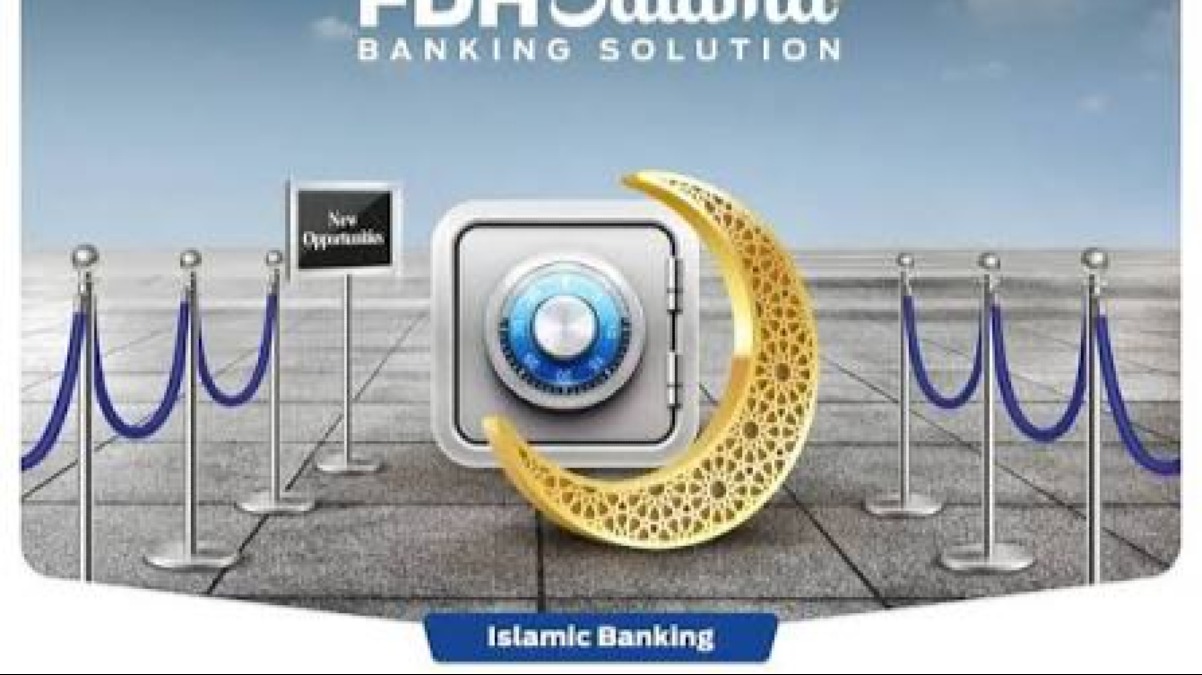
For the Muslim business community, however, the conversation takes a different turn, and it can begin from a real achievement rather than a plea. What MCCCI is asking the Reserve Bank to deliver — affordable, accessible financing that lets enterprises grow — has, for Muslim entrepreneurs, already begun to arrive, and in a form conventional cheaper credit could never take. In 2024, FDH Bank launched Salama Banking, the country’s first Shariah-compliant banking window, approved by the Reserve Bank of Malawi and guided by its own Shariah Advisory Committee. It was brought to market in partnership with the Muslim Association of Malawi and the Qadria Association of Malawi, and it offers riba-free products including Murabaha, the cost-plus financing structure. Within a year it had grown from three service centres in Limbe, Mangochi and Lilongwe to a nationwide rollout, serving thousands of customers and processing transactions worth billions of kwacha.
This matters because, for the faithful, the relief MCCCI is calling for was never going to come from lower interest rates. Interest is riba, forbidden in Islam, so a cheaper conventional loan is no more usable to an observant Muslim trader than an expensive one. For decades that left faithful Malawian Muslims effectively shut out of the formal financing system, choosing to stay away rather than compromise their principles. Salama Banking has begun to change that — not by making interest cheaper, but by removing it altogether. It delivers exactly what the private sector says the economy needs, access to finance that helps businesses grow, in a structure that honours the faith of the community it serves.
And here is the wider significance, the part that should interest not only Muslims but every advocate of financial inclusion in Malawi. Salama is proof that ethical, faith-based financing can widen access where conventional credit has failed. Its models — Murabaha cost-plus sales, and within the broader Islamic tradition Musharaka profit-sharing partnerships and Qard al-Hasan interest-free loans — share risk between financier and entrepreneur rather than loading it onto the borrower through compounding interest. In an economy where the World Bank notes that high borrowing costs have left most firms operating below half their productive capacity, a financing model that does not bury businesses in interest is not a niche religious concern. It is a template worth studying for the very access-and-affordability problem MCCCI has put on the table.
None of this is to say the work is finished. The harder question is whether Salama’s reach is yet touching the trader in Ndirande, the tailor in Zomba, the small hardware dealer in Mangochi. A Shariah-compliant window built around deposit accounts and Murabaha financing is a genuine start, but the small and micro enterprises that form the backbone of Muslim commercial life often need something more specific: small-ticket, accessible, low-barrier facilities of the kind that microfinance, not a commercial bank window, is designed to provide. Rotating savings groups and trader cooperatives in Muslim communities already practise that spirit informally, without calling it by name. The task now is to deepen and extend the model Salama has proven — to carry it the last mile, from the banking hall to the market stall — work for the community itself, its mosque leadership, its business owners, and institutions like MAM that helped bring Salama into being.
The MCCCI’s call to the RBM is legitimate and the easing trend is welcome. But for a Muslim trader in Ndirande who cannot service a 20-percent loan on a small stock of goods, the encouraging news is that the halal alternative is no longer hypothetical. The unfinished task is to carry it the last mile, from the banking hall to the market stall.
Marshall Dyton
Comments
Be the first to comment.